
Criando um caminho para a eficiência energética com o economizador Aalborg Micro
A DFDS é uma das companhias de navegação mais movimentadas do norte da Europa, operando embarcações de carga e de passageiros no Mar do Norte, no Mar Báltico e no Canal da Mancha. Por mais de 50 anos, a empresa tem confiado na Alfa Laval em diversas aplicações. Uma delas é a recuperação de calor residual, onde o economizador Aalborg Micro da Alfa Laval proporcionou a três balsas da DFDS uma solução antes impensável.
DATA 2026-05-04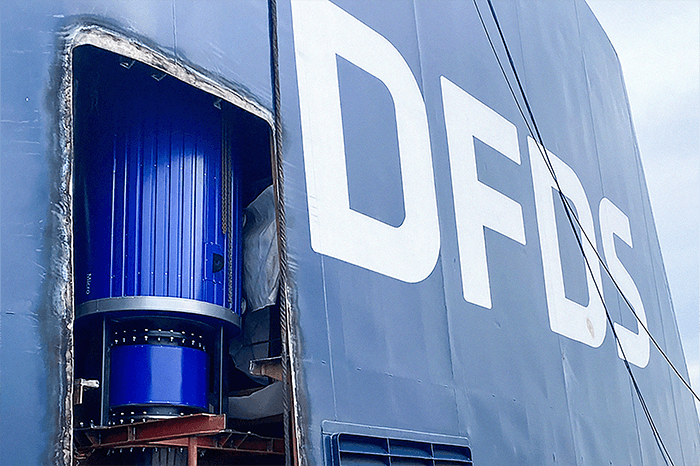
Balsas sem recuperação de calor residual
A DFDS possui três balsas em sua rota pelo Canal da Mancha, entre Dover e Dunkirk. Elas foram adquiridas de outro armador que as construiu há cerca de 15 anos. Infelizmente, foram projetadas sem sistemas de recuperação de calor residual — presumivelmente devido ao espaço ocupado pelas caldeiras de gás de exaustão disponíveis na época.
“Normalmente, no setor de balsas e RoRo em que operamos, sempre incluiríamos sistemas de recuperação de calor”, afirma Jan Blak, Superintendente da DFDS. “Aqui, tínhamos que fornecer todo o vapor necessário com as duas caldeiras a óleo a bordo. As balsas consomem uma quantidade substancial de vapor para fins industriais, mas também há um consumo significativo para necessidades domésticas, como o aquecimento das acomodações.”
Sem solução convencional
Produzir todo o vapor queimando óleo combustível era motivo de frustração para a DFDS, especialmente com o crescente foco em emissões e eficiência energética. Em 2012, a empresa realizou um estudo de viabilidade para a modernização (retrofit) da recuperação de calor. Infelizmente, provou-se impossível obter cobertura total — mesmo com uma grande reconstrução.
“Significaria sacrificar o deck de veículos apenas para ampliar o revestimento da chaminé, além de muita realocação de equipamentos”, explica Blak. “Não havia como instalar caldeiras de gás de exaustão convencionais em todos os quatro motores principais. No melhor cenário, poderíamos extrair calor de dois. Mas essas embarcações podem operar com dois, três ou quatro motores principais ligados, e a configuração varia. Às vezes estaríamos operando sem a recuperação conectada, então tivemos que abandonar a ideia.”
Então, há um ano e meio, tudo mudou para Blak e seus colegas: “Começamos a investigar após ver o novo economizador Aalborg Micro e encontramos uma solução que é muito, muito melhor.”
Novas possibilidades com 100% de cobertura
Com sua flexibilidade única, o Aalborg Micro finalmente abriu as portas para a recuperação de calor residual nas balsas da DFDS. Além de caber sem ocupar espaço de carga, ele foi capaz de cobrir todos os cenários operacionais.
“Criamos uma solução onde cada um dos quatro motores principais tem seu próprio Aalborg Micro, todos alimentando um balão de vapor comum”, diz Blak. “Independentemente da configuração de motores em funcionamento, o calor residual sempre pode ser extraído. Às vezes haverá até excesso de vapor, como no pior cenário, quando todos os motores estão ligados, por isso também há um condensador de descarte (dump condenser).”
Quando estamos no porto, ainda conseguimos cobrir parte do nosso consumo de vapor usando o [Aalborg] Micro no gerador”, diz Blak. “Não faria sentido não incluir o gerador nisso.”
Na verdade, houve espaço até para um Aalborg Micro adicional para atender ao grupo gerador a bordo. Isso foi um bônus, já que atualmente não há energia de terra disponível em Dover ou Dunkirk.
Espaço de carga e estabilidade preservados
A DFDS agiu rápido com a solução Aalborg Micro, instalando-a nas três balsas no início de 2022. Tudo — desde os próprios economizadores até o balão de vapor compartilhado e as bombas de circulação — foi encaixado em espaços não utilizados dentro do revestimento da chaminé. O processo de instalação da terceira unidade foi otimizado para apenas 18 dias.
“Na verdade, instalamos os Aalborg Micros na parte superior da chaminé, que é o pior lugar para colocar peso adicional em um navio”, observa Blak. “Mas, como os Micros são muito leves, permanecemos dentro dos requisitos de estabilidade. Não há perda de carga nem impacto relevante na estabilidade, o que é realmente incrível.”
O revolucionário Aalborg Micro
O Aalborg Micro é uma alternativa aos caldeirões de gás de exaustão convencionais, oferecendo maior eficiência e uma pegada (espaço ocupado) radicalmente reduzida. Projetado para utilizar um espaço de vapor externo — por exemplo, compartilhando o balão de vapor de uma caldeira a óleo conectada — ele não possui espaço de vapor próprio. Isso o torna pequeno e extremamente leve.
“A água em uma caldeira de gás de exaustão convencional adiciona muitas toneladas de peso morto”, diz Blak.
“Em um Aalborg Micro, você tem apenas cerca de 200 quilos de água, porque é basicamente uma serpentina de aquecimento fina dentro de uma carcaça vazia. Isso torna o Micro muito, muito leve e compacto em comparação com os sistemas convencionais, o que é, sem dúvida, a maior vantagem.”
Jan Blak, Superintendent at DFDS
Melhor economia de combustível, menores emissões das embarcações
A solução Aalborg Micro está em operação há alguns meses e os ajustes ainda estão em andamento. No entanto, os resultados nas balsas já são promissores. Os números atuais mostram que a quantidade de combustível consumida pelas caldeiras a óleo caiu entre 70% e 80%. Com essa taxa de economia e os preços atuais do combustível, o investimento se pagará em apenas alguns anos.
Blak ressalta que os benefícios financeiros e ambientais são difíceis de separar.
“Assim que começamos a economizar combustível, começamos a economizar dinheiro, mas também minimizamos nossas emissões”, explica Blak. “Comparado a muitas outras iniciativas de redução de emissões, o Aalborg Micro tem um modelo de negócio (business case) muito bom. Economizamos desde o primeiro dia, então é uma situação de ganha-ganha, não importa como se olhe.”
Tags
Tudo